ABM (Account-Based Marketing) is A go-to-market strategy that concentrates sales and marketing resources on a defined set of target accounts, using personalized campaigns to penetrate specific organizations.
Account-Based Marketing (ABM) flips the traditional funnel. Instead of generating as many leads as possible and qualifying down, ABM starts with a target account list and builds personalized campaigns to engage specific companies and buying committees within them.
ABM Tiers
1:1 ABM (Strategic): Fully customized campaigns for 10-50 high-value accounts. Dedicated resources per account. Highest cost, highest deal size.
1:Few ABM (Lite): Cluster 50-200 accounts by segment. Personalized by segment, not individual account. Balanced approach.
1:Many ABM (Programmatic): Technology-driven personalization across 200-1,000+ accounts. Uses intent data and automation for targeting at scale.
RevOps Role in ABM
RevOps enables ABM by building the infrastructure: account scoring models, lead-to-account matching (LeanData), campaign attribution across the buying committee, and unified reporting that shows account-level engagement rather than just lead-level metrics.
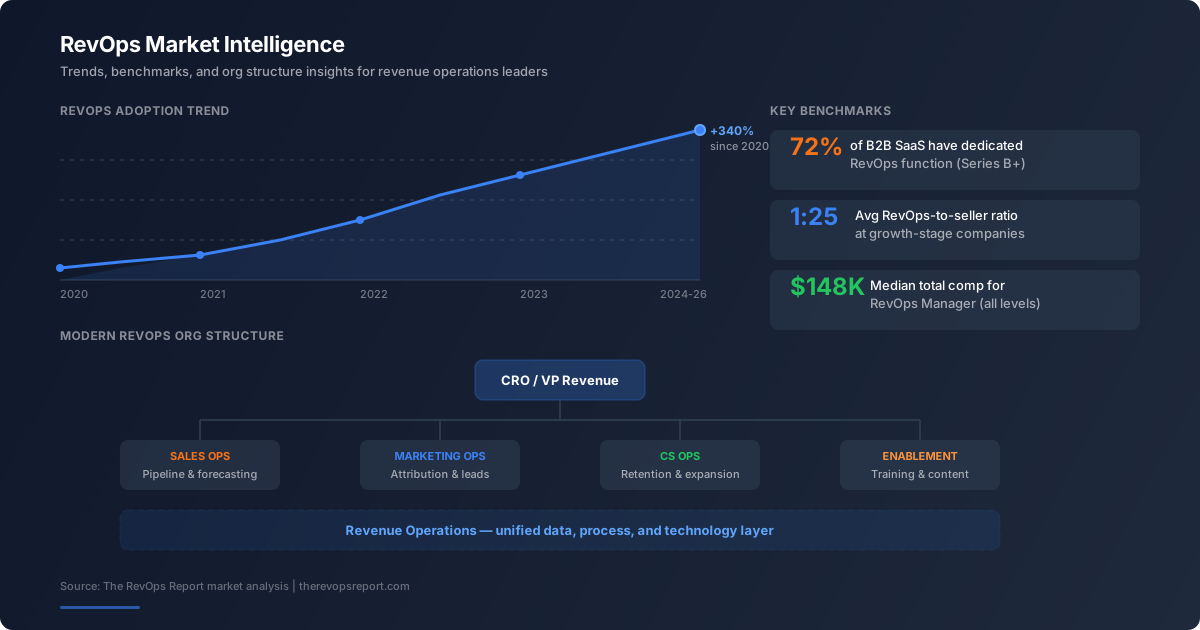
The shift to ABM is a major driver of the RevOps function, because ABM requires marketing and sales to share data, tools, and metrics more closely than ever. Demandbase is the leading ABM platform.
Frequently Asked Questions
What is the difference between ABM and demand gen?
Demand gen casts a wide net to generate leads. ABM targets specific accounts with personalized outreach. Many teams run both. ABM for enterprise accounts and demand gen for mid-market and SMB.