
COMPARISON
Salesforce
VS
HubSpot

Salesforce vs HubSpot: CRM Compared for RevOps Teams

This is the CRM comparison. Every B2B ops team has either made this decision, is about to make it, or is living with the consequences of making it wrong. Salesforce gives you infinite flexibility and a brutal learning curve. HubSpot gives you a unified platform that works out of the box but hits walls when your data model gets complex. For RevOps, the choice is really about how much customization you need versus how much admin overhead you can absorb.

!
Quick Verdict: Salesforce is the right CRM for organizations with complex sales motions, custom objects, advanced reporting needs, and dedicated admin headcount. HubSpot is the right CRM for teams that want marketing, sales, and service unified on one platform with faster time-to-value and lower admin burden. The honest truth: Salesforce can do everything HubSpot does and more. The question is whether you can afford the people, time, and money to make it do those things.
Salesforce vs HubSpot at a Glance

FactorSalesforceHubSpot
Pricing$25-300/user/mo + add-ons Costs compound fastFree CRM; paid from $20/user/mo to $150+/user/mo
Best ForEnterprise, complex sales motions, heavy customizationSMB to mid-market, unified marketing + sales + service
Data ModelCustom objects, unlimited fields, relationships Infinitely flexibleStandard objects with custom properties Limits at scale
Admin RequirementDedicated admin required Non-negotiablePart-time admin sufficient for most orgs Lower overhead
EcosystemAppExchange: 7,000+ apps LargestApp Marketplace: 1,500+ apps
Marketing AutomationRequires Pardot/MCAE ($1,250+/mo extra)Built-in Marketing Hub Unified
Implementation3-6 months typical Long2-6 weeks typical Fast
Total Cost (50 users, 3 years)$500K-$1.2M+ (licenses + admin + SI) Expensive$150K-$400K Lower TCO

Detailed Feature Comparison

FeatureSalesforceHubSpot
Custom ObjectsUnlimited, full relationship modeling Best in classAvailable on Enterprise+ but less flexible
Workflow AutomationFlow Builder: complex multi-object logic More powerfulWorkflows: simpler but covers 80% of use cases
ReportingCustom report types, cross-object, dashboards DeepestGood dashboards, custom reports on Enterprise+
AttributionCampaigns + custom attribution modelsBuilt-in multi-touch attribution Easier to set up
Lead RoutingAssignment rules + ecosystem (LeanData, etc.) More optionsBasic rotation, Operations Hub for advanced
Operations HubN/A (use Apex, Flow, or third-party tools)Data sync, programmable automation, data quality RevOps-specific
API AccessComprehensive REST + SOAP + Bulk Enterprise-gradeGood REST API, rate limits on lower tiers

When to Use Which

Choose Salesforce When

  • Your data model requires custom objects, complex relationships, or territory hierarchies that standard CRM objects cannot represent
  • You have (or will hire) a dedicated Salesforce admin and can invest in ongoing platform maintenance
  • Your sales motion is complex: CPQ, multi-currency, advanced approval workflows, or custom pricing logic
  • You need deep integration with enterprise tools through AppExchange (7,000+ integrations)
  • Reporting requirements include cross-object reports, custom report types, and board-level dashboards that pull from complex data models

Choose HubSpot When

  • You want marketing, sales, and service on one platform without paying for and integrating separate tools
  • Your ops team is lean (1-2 people) and you cannot dedicate someone to full-time CRM administration
  • Time-to-value matters and you need reps productive in weeks, not months
  • Your marketing team needs native automation, email, and attribution without bolting on Pardot or Marketo
  • Operations Hub features (data sync, programmable automation, data quality tools) align with your RevOps priorities

When to Consider Both or Neither

Running both is more common than you think. Some orgs use HubSpot for marketing automation and Salesforce as the system of record for sales. This works if you invest in the bidirectional sync (HubSpot-Salesforce connector is mature but not flawless). If you outgrow HubSpot, migrating to Salesforce is painful but well-documented. The reverse migration (Salesforce to HubSpot) is harder because you are usually losing data model complexity.

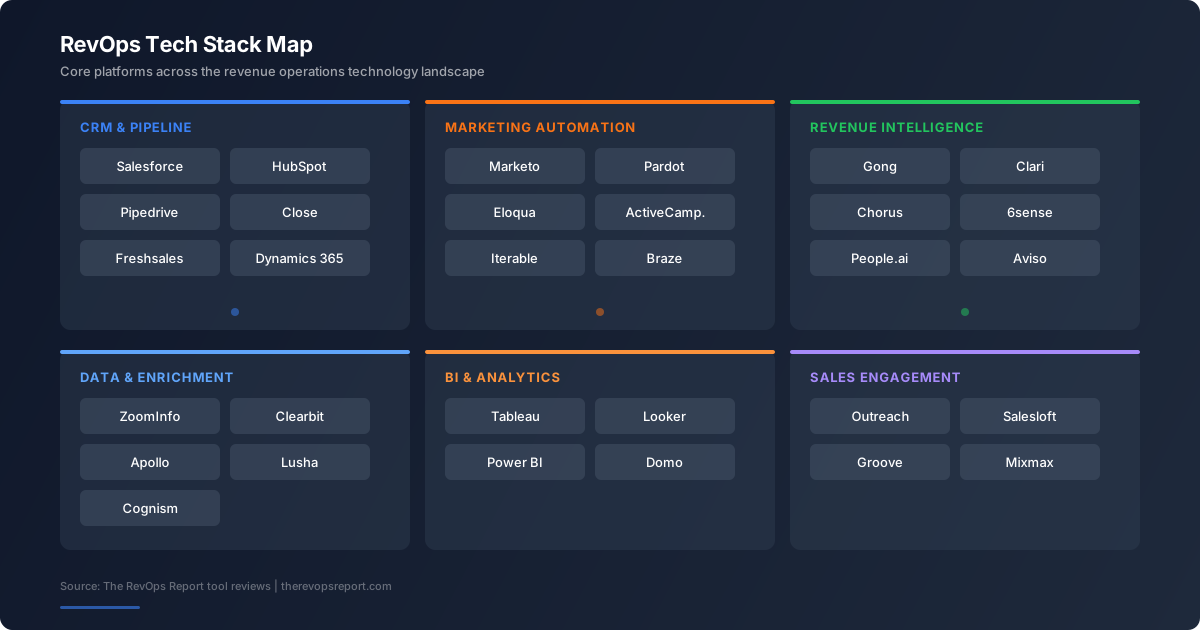
What This Means for Your Stack

RevOps-Specific Considerations

  • Total cost of ownership is where Salesforce kills budgets. The license fee is the starting point. Add a dedicated admin ($80-120K/year), a systems integrator for initial setup ($50-200K), and ongoing AppExchange subscriptions. HubSpot TCO is 40-60% lower for most orgs under 200 users.
  • Data model flexibility is the real differentiator, not features. Salesforce lets you model any business process with custom objects and relationships. HubSpot works beautifully until your data model outgrows standard objects. If you sell through channels, have complex product hierarchies, or need custom quoting logic, HubSpot walls will show up fast.
  • Reporting depth favors Salesforce significantly. Cross-object reports, joined reports, custom report types, and Einstein Analytics give RevOps teams the ability to slice data any way they need. HubSpot reporting is solid but hits ceilings on complex cross-object analysis.
  • HubSpot Operations Hub is a genuine RevOps advantage. Data quality automation, programmable automation with custom code, and data sync across tools are features that Salesforce requires third-party tools or Apex code to replicate.
  • Migration risk is asymmetric. Moving from HubSpot to Salesforce is common and well-supported. Moving from Salesforce to HubSpot means simplifying your data model, which often means losing functionality. Choose based on where you are going, not where you are.

Winner by Use Case

Use CaseWinnerWhy
Complex enterprise salesSalesforceCustom objects, CPQ, multi-currency, and advanced automation
Unified marketing + sales platformHubSpotNative marketing automation without bolting on Pardot
Lean ops teamHubSpotLower admin overhead, faster deployment, self-serve configuration
Advanced reportingSalesforceCross-object reports, custom report types, Einstein Analytics
Budget under $100K/yearHubSpotLower TCO including admin, implementation, and license costs
Custom data modelSalesforceUnlimited custom objects and relationship types

The RevOps Report's Bottom Line

Salesforce is the more powerful CRM. Full stop. But power without the people to wield it is just expensive shelfware. If you have dedicated ops headcount, complex sales motions, and the budget for a 3-6 month implementation, Salesforce gives you a platform you will never outgrow. If your team is lean, your sales motion is straightforward, and you want marketing and sales unified without stitching together three products, HubSpot delivers 80% of the capability at 40% of the total cost. The worst decision is choosing Salesforce and then under-investing in the admin and configuration it demands.

Get Weekly RevOps Intelligence

Tool reviews, salary benchmarks, and stack recommendations for RevOps leaders.

Subscribe Free
Disclosure: The RevOps Report may receive affiliate compensation from tools mentioned here. Our analysis is independent. Every claim is based on publicly available data and user feedback.
Last Updated: January 2026