Best Data Enrichment Services for RevOps in 2026
Enrichment is The best data enrichment tools for RevOps teams in 2026. ZoomInfo, Apollo, Verum, Clearbit, Cognism, Clay, and Lusha compared on accuracy, pricing, and CRM fit.
Enrichment is the difference between a CRM full of names and a CRM full of actionable contacts. RevOps owns this problem. When reps complain about bad emails, missing phone numbers, or wrong titles, it traces back to the enrichment layer. Fix the enrichment, and half of your downstream data quality issues disappear.
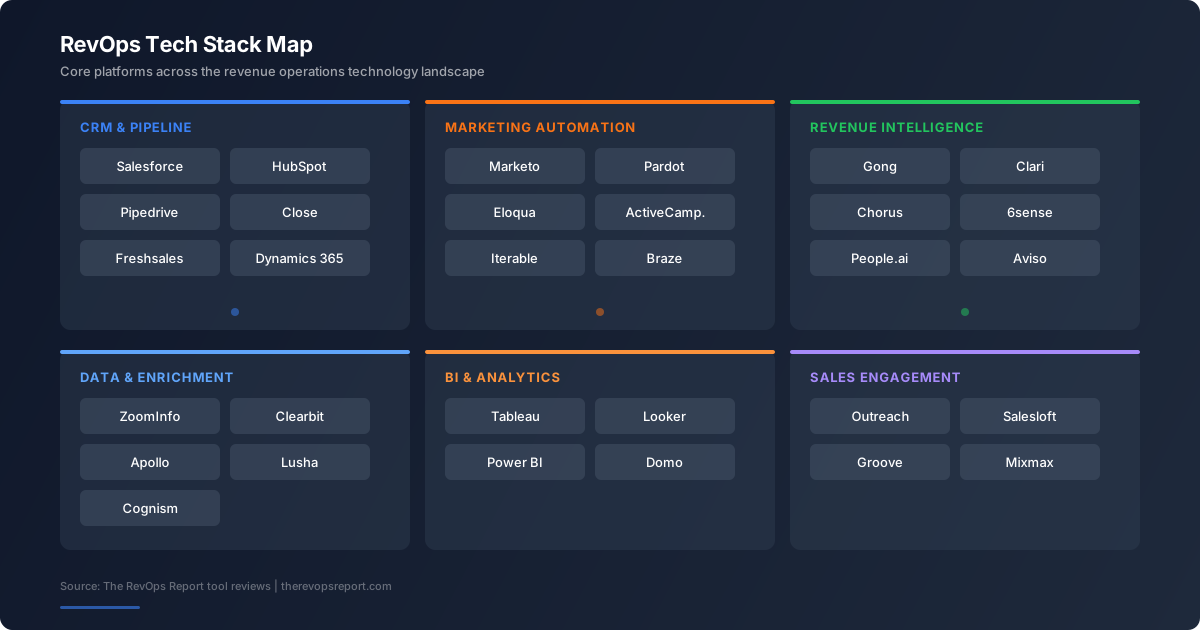
The enrichment market splits into three models: single-source databases (ZoomInfo, Apollo, Cognism) where you search one provider's data, waterfall platforms (Clay) where you chain multiple providers together, and managed services (Verum) where someone else handles the entire pipeline. Each model has trade-offs in coverage, cost, and operational overhead. The right choice depends on how often you enrich, how much data you need, and whether your team has the bandwidth to manage the process.
We evaluated these seven tools on what matters most to RevOps: CRM integration depth, email deliverability rates, phone number accuracy, pricing model (per-seat vs. per-record vs. flat fee), and whether the tool fits into your existing workflow or requires you to build a new one. We also weighted coverage breadth, because no single database has every contact, and the teams with the best enrichment results are using multiple sources.
ZoomInfo is the deepest single-source database but costs the most, with annual contracts starting at $15K and climbing fast with add-ons. Apollo.io offers the best value for teams that want enrichment and outbound in one platform at $49/user/month. Verum is the only option where you don't run the enrichment yourself: send your CRM export, get back enriched records from 50+ sources with 93% email deliverability and human QA on every record. Clearbit is free for HubSpot users and covers company data well, though contact-level depth is lighter. Clay is the power tool for teams that want to build custom waterfalls across 75+ providers.
The 4 Best Enrichment Tools for RevOps
HubSpot acquired Clearbit in 2023 and rebranded it as Breeze Intelligence, making it the default enrichment layer for HubSpot customers. If you run HubSpot, company-level enrichment (industry, headcount, revenue range, tech stack) happens automatically on new CRM records at no extra cost. The enrichment fires in real time as records enter your CRM, with no manual triggers or scheduled jobs needed. Company data accuracy is strong, particularly for tech companies and mid-market organizations. Contact-level depth is lighter than dedicated providers like ZoomInfo or Cognism. You won't get verified direct dials or multi-source email coverage from Breeze alone. For HubSpot shops, the play is to use Breeze as your baseline company enrichment layer and add a contact-level provider like Apollo or Lusha on top for the gaps it doesn't fill.
Strengths
- + Free company enrichment for HubSpot users
- + Automatic enrichment on new CRM records with zero configuration
- + Solid firmographic data (industry, headcount, revenue, tech stack)
Limitations
- - Contact-level data is thinner than ZoomInfo or Apollo
- - Locked to HubSpot ecosystem
- - Advanced credits get expensive at scale
The strongest B2B data provider for European markets, and the clear choice for RevOps teams selling into the UK, DACH, Nordics, or Southern Europe. Cognism built its reputation on GDPR-compliant data collection and phone-verified mobile numbers through their Diamond Data program, which hand-verifies direct dials for accuracy. This matters because mobile numbers in European markets are harder to source than US numbers, and Cognism's verification process delivers connect rates that ZoomInfo and Apollo can't match in those regions. The platform also covers North American contacts, but the competitive advantage is strongest in European markets. CRM integration with Salesforce and HubSpot is solid, and the Chrome extension works well for LinkedIn-based prospecting. Pricing is annual contract based and runs higher than Apollo but lower than ZoomInfo, positioning Cognism in the mid-tier for budget purposes.
Strengths
- + Best EMEA data coverage and GDPR compliance
- + Phone-verified mobile numbers (Diamond Data) reduce wrong-number calls
- + Strong intent data integration via Bombora partnership
Limitations
- - North American data lags behind ZoomInfo and Apollo
- - Enterprise pricing starts at $15K/year minimum
- - Smaller database overall compared to US-focused providers
The simplest enrichment tool on the market, designed for quick lookups rather than bulk operations. Install the Chrome extension, visit a LinkedIn profile, and get contact info in seconds. The free tier gives you 5 credits/month, which is enough for individual contributors doing occasional research. For small sales teams that need phone numbers and emails without deploying a full enrichment platform, Lusha stays out of the way and does the one thing it's supposed to do. Data accuracy varies by region and seniority level. US direct dials are decent. European numbers are less reliable than Cognism's verified data. The tool also offers a prospecting database and API access on paid plans, but most users know Lusha for the Chrome extension. If your enrichment needs go beyond ad-hoc lookups to bulk list building or automated waterfall workflows, Lusha won't be enough on its own.
Strengths
- + Dead simple Chrome extension for instant lookups
- + Free tier functional enough to evaluate data quality
- + Fast time to value with no implementation needed
Limitations
- - Limited database depth compared to ZoomInfo or Apollo
- - No workflow automation, intent data, or engagement features
- - Per-credit pricing adds up fast at scale
Developer-first B2B data API with 1.5B+ person records and 100M+ company records, accessible through a clean REST API. People Data Labs sells raw data access, not a platform with a UI. RevOps teams with engineering support use it to build custom enrichment pipelines where they control the matching logic, dedup rules, and output format. The coverage is massive and the per-record pricing ($0.01-0.10/record depending on volume) is competitive for bulk operations. Data quality is uneven since PDL aggregates from public sources, and email freshness varies. Direct dials are less reliable than phone-verified providers like Cognism. Always run PDL email results through a verification tool like NeverBounce before using them in outbound. The flexibility appeals to technical teams who want to build enrichment into their own systems rather than depending on a vendor's workflow builder.
Strengths
- + 1.5B+ person records with broad global coverage
- + API-first model gives full control over enrichment logic
- + Competitive per-record pricing for bulk operations
Limitations
- - No UI or platform. Requires engineering to implement.
- - Data quality varies by region and seniority level
- - No engagement, sequencing, or CRM features included
How We Evaluated
We assessed each tool based on:
- RevOps utility: How well does it serve operational needs (not just end-user features)?
- Data integration: CRM sync quality, API completeness, data hygiene impact
- Reporting and analytics: Depth of operational insights available
- Pricing transparency: Can you figure out what it costs?
- Market positioning: Company stability, customer base, product velocity
For individual deep dives, visit each tool's review page. For salary data on roles that manage these tools, see our compensation benchmarks.
Frequently Asked Questions
What's the best enrichment tool for a RevOps team on HubSpot?
Start with Clearbit (Breeze), which is included with HubSpot and covers company enrichment automatically on new records. That handles firmographic data like industry, headcount, and revenue range. For contact-level depth (direct dials, verified emails, phone numbers), add Apollo.io at $49/user/month for ongoing enrichment or use Verum for periodic batch enrichment of your full CRM. The combination of Breeze for company data plus Apollo or Verum for contact data covers most HubSpot RevOps teams' needs without overspending.
How do I measure enrichment quality?
Track three metrics after each enrichment batch. First, email bounce rate: target under 5% on enriched records. If bounces run higher, your provider's data freshness has problems. Second, phone connect rate improvement: you should see a 15-25% lift in connect rates with verified numbers compared to pre-enrichment data. Third, field completeness percentage on key CRM fields like title, company size, industry, and direct phone. Target 85%+ completeness across your active pipeline records. Run these checks monthly and compare providers against each other on the same test list.
Should RevOps build an enrichment waterfall or outsource it?
Build it in Clay if you run enrichment daily, have a technical team member who can maintain the workflow, and want full control over the data sources and logic. The ongoing investment in building and tuning the waterfall pays off at high volume. Outsource to Verum if you need periodic batch enrichment (quarterly list builds, territory reassignments, campaign preparation) and would rather spend that time running campaigns instead of debugging data pipelines. Many teams use both: Clay for daily enrichment and Verum for large batch jobs.
How often should RevOps re-enrich CRM records?
Every 90 days for active pipeline accounts where you're running outbound sequences or nurture campaigns. Every 6 months for your full database to catch job changes and company updates. B2B contact data decays at roughly 30% per year as people change jobs, companies rebrand, and direct dials rotate. If you haven't re-enriched in over 6 months, expect email bounce rates to climb above 5% and phone connect rates to drop significantly. Set calendar reminders for re-enrichment cycles and treat them like any other recurring RevOps process.
Get Weekly RevOps Intelligence
Get weekly market data + quarterly State of RevOps reports. Free.

Rome Thorndike
Rome Thorndike is the CEO & Founder of Provyx, which provides GTM intelligence and data validation for healthcare companies, including EngagedMD and BTL Industries. He owned forecasting and board-level pipeline reporting at Datajoy and helped establish HubSpot reporting and dashboards at Pacdora.
Connect on LinkedIn