COMPARISON
Highspot
VS
Seismic

Highspot vs Seismic 2026: A RevOps Comparison

Highspot and Seismic are the two dominant enterprise sales enablement platforms. Both promise to get the right content in front of reps at the right time. Both cost $30-80/user/mo. Both require significant organizational commitment to deploy. The differences are real but subtle: Highspot leads on training and coaching integration while Seismic leads on content automation and analytics. For RevOps, either platform is a major investment that will take 3-6 months to show results.

!
Quick Verdict: Highspot is the better choice when sales training, coaching, and rep onboarding are the primary enablement priorities alongside content management. Its training module (Highspot Training and Coaching) is natively integrated, not bolted on. Seismic is the better choice when content automation, dynamic content assembly, and deep usage analytics are the priorities. Its LiveDocs technology automates personalized content creation at scale. Both cost roughly the same. The tiebreaker is which problem is bigger: training your reps or automating your content.

Highspot vs Seismic compares Highspot and Seismic are the two dominant enterprise sales enablement platforms. Both promise to get the right content in front of reps at the right time. Both cost $30-80/user/mo. Both require significant organizational commitment to deploy. The differences are real but subtle: Highspot leads on training and coaching integration while Seismic leads on content automation and analytics. For RevOps, either platform is a major investment that will take 3-6 months to show results.

Updated May 2026.

Highspot vs Seismic at a Glance

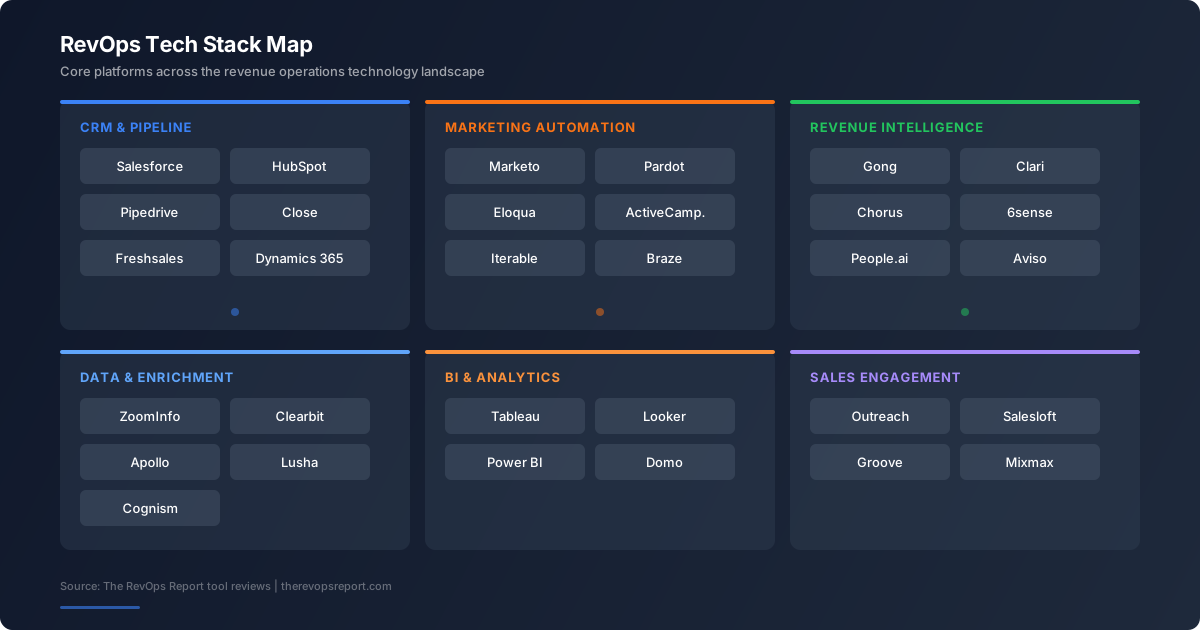
RevOps tech stack map showing CRM, marketing automation, revenue intelligence, data enrichment, BI, and sales engagement platforms
FactorHighspotSeismic
Pricing$30-80/user/mo Enterprise pricing, annual$30-80/user/mo Enterprise pricing, annual
Best ForContent management + sales training and coachingContent automation + analytics and engagement tracking
Content ManagementAI-powered recommendations, Spots (curated collections) Intuitive organizationCentralized library with predictive content Strong search
Content AutomationBasic content assemblyLiveDocs: dynamic, data-driven content generation Unique capability
TrainingIntegrated Training and Coaching module NativeSeismic Learning (formerly Lessonly acquisition) Acquired capability
AnalyticsContent usage and rep engagement trackingDeeper content analytics with buyer engagement scoring More granular
CRM IntegrationSalesforce, HubSpot, DynamicsSalesforce, HubSpot, Dynamics, Outlook
Implementation8-16 weeks Long8-16 weeks Long

Detailed Feature Comparison

FeatureHighspotSeismic
Content RecommendationsAI-powered suggestions based on deal context Strong AI layerPredictive content recommendations based on buyer stage
Dynamic ContentBasic personalization of templatesLiveDocs pulls live CRM data into slides, proposals, one-pagers Most advanced
Sales TrainingNative training platform with practice, quizzes, certification Tightly integratedSeismic Learning (Lessonly) integrated post-acquisition
CoachingVideo pitch practice with AI feedback and manager scoring Purpose-builtCoaching available through Learning module
AnalyticsContent scorecard: usage, shares, influence on dealsContent analytics with buyer-side engagement tracking Deeper buyer insight
Digital Sales RoomsAvailable for sharing curated content with buyersAvailable with engagement tracking and analytics More analytics

When to Use Which

Choose Highspot When

  • Sales training and onboarding are a primary enablement gap, and you want content management and training on one platform instead of buying Seismic plus a separate LMS
  • Rep coaching with video practice, AI scoring, and manager review is part of your enablement strategy
  • Content organization through "Spots" (curated, contextual collections) matches how your team thinks about content by deal stage, persona, or product
  • AI-powered content recommendations based on deal context, buyer persona, and sales stage are valuable to your reps
  • You want a single vendor for content management, training, and coaching without integrating multiple point solutions

Choose Seismic When

  • Content automation is a priority and you need LiveDocs to dynamically generate personalized proposals, one-pagers, and decks from CRM data at scale
  • Buyer-side engagement analytics matter: you want to see which pages a prospect viewed, how long they spent, and which content influenced the deal
  • Your content library is large (5,000+ assets) and you need strong search, tagging, and predictive recommendations to help reps find the right asset quickly
  • News and social selling features (Seismic LiveSocial) are part of your enablement strategy for building rep personal brands
  • Integration depth with email and calendar tools (Outlook, Gmail) is important for surfacing content where reps already work

When to Consider Both or Neither

Running both is wasteful. They overlap too much on core content management. If neither fits your budget, Showpad at $35-55/user/mo is the mid-market alternative with a simpler UI and faster implementation. For teams under 50 reps, Google Drive or SharePoint with a well-organized folder structure and a lightweight tool like Guru ($10/user/mo) for knowledge management covers 60% of enablement needs at 10% of the cost.

What This Means for Your Stack

RevOps-Specific Considerations

  • Adoption is the real metric, not features. Both platforms have feature parity on 80% of capabilities. The differentiator is whether your reps use the tool. G2 user satisfaction slightly favors Highspot for ease of use (8.8 vs 8.4 for ease of setup). Run a pilot with 20 reps before committing to a $200K+ annual contract.
  • Content governance impacts RevOps data quality. When reps share outdated pricing, wrong case studies, or superseded decks, the downstream impact hits pipeline accuracy and deal velocity. Both platforms solve this by centralizing content with version control and expiration. The ROI calculation should include the cost of deals damaged by outdated content.
  • LiveDocs (Seismic) is a real differentiator if you have a content assembly problem. If your team spends hours building custom proposals by pulling data from Salesforce into PowerPoint or Google Slides, LiveDocs automates that workflow. Highspot does not have an equivalent. Quantify the hours your team spends on manual content assembly to assess the value.
  • Training platform consolidation favors Highspot. If you currently pay for a separate LMS or onboarding tool (Lessonly, WorkRamp, Brainshark), Highspot Training and Coaching module can replace it. The consolidation value is real: one platform for content, training, and coaching reduces vendor management and creates a connected data model between training completion and content usage.

Winner by Use Case

Use CaseWinnerWhy
Sales training and onboardingHighspotNative training module with practice and certification
Content automationSeismicLiveDocs dynamic content generation from CRM data
Buyer engagement analyticsSeismicDeeper page-level tracking and engagement scoring
Rep coachingHighspotVideo pitch practice with AI feedback built in
Large content libraries (5,000+ assets)SeismicStronger search and predictive content discovery at scale

The RevOps Report's Verdict

Highspot and Seismic are closer in capability than their sales teams will admit. Both manage content, both recommend assets, both integrate with your CRM, and both cost roughly the same. The honest differentiation: Highspot is better when training and coaching are central to your enablement strategy because the training module is native, not acquired. Seismic is better when content automation and buyer analytics are the priority because LiveDocs and engagement tracking are more advanced. Pick the tool that solves your bigger problem. And whichever you choose, plan for a 3-6 month adoption curve before expecting ROI. Enablement platforms do not deliver value on install day.

What Changed Recently

  • Q1 2026: Highspot rolled out generative AI Spot summaries and meeting prep cards. Seismic shipped Aura, its generative AI assistant, into general availability for content discovery and rep coaching prompts. Both vendors are racing to embed LLM-powered search inside the rep workflow.
  • Q4 2025: Seismic deepened the Salesforce integration with opportunity-level engagement signals that log content views, buyer time-on-page, and asset shares directly to opportunity activity timelines. Highspot still surfaces engagement at the contact level rather than rolling up to the opportunity by default.
  • Q3 2025: Highspot completed the integration of the Learn Amp acquisition into Highspot Training and Coaching, replacing the prior Highspot Training experience. Seismic Learning (Lessonly) added scenario-based practice modules with AI scoring.
  • Mid-2025: Both platforms added native multi-language content workflows. Highspot supports automatic translation review queues across 14 languages. Seismic LiveDocs auto-localizes dynamic content from a single source asset using ML translation with human review checkpoints.

Frequently Asked Questions

Which is better for RevOps: Highspot or Seismic?

Highspot is the better choice when sales training, coaching, and rep onboarding are the primary enablement priorities alongside content management. Its training module (Highspot Training and Coaching) is natively integrated, not bolted on. Seismic is the better choice when content automation, dynamic content assembly, and deep usage analytics are the priorities. Its LiveDocs technology automates personalized content creation at scale. Both cost roughly the same. The tiebreaker is which problem is bigger: training your reps or automating your content.

How does Highspot pricing compare to Seismic?

Highspot starts at $30-80/user/mo Enterprise pricing, annual, while Seismic starts at $30-80/user/mo Enterprise pricing, annual. The right choice depends on your team size, required features, and budget. Check each vendor's current pricing page for the latest plans.

Can I use Highspot and Seismic together?

Yes, many RevOps teams run Highspot and Seismic in parallel. The key is defining clear ownership for each tool so data stays clean. Use native integrations or middleware like Workato or Tray.io to sync records between them. Before committing to both, verify the overlap doesn't create duplicate workflows or conflicting data sources.

What are the main differences between Highspot and Seismic?

Highspot and Seismic are the two dominant enterprise sales enablement platforms. Both promise to get the right content in front of reps at the right time. Both cost $30-80/user/mo. Both require significant organizational commitment to deploy. The differences are real but subtle: Highspot leads on training and coaching integration while Seismic leads on content automation and analytics. For RevOps, either platform is a major investment that will take 3-6 months to show results.

Should I switch from Highspot to Seismic?

Switching from Highspot to Seismic involves migration costs, retraining, and potential downtime. Before committing, audit your current usage: if you're using less than 40% of Highspot's features, a switch may simplify your stack. If you're deeply integrated, the switching cost may outweigh the benefits. Run a 30-day pilot with Seismic alongside your current setup before making a full commitment.

Highspot vs Seismic: which integrates more deeply with Salesforce for opportunity-level insights?

Seismic has the deeper Salesforce integration for opportunity-level reporting in 2026. Seismic logs content views, buyer engagement time, and asset shares directly to opportunity activity timelines, so a deal record shows which decks the buyer opened and for how long. Highspot logs engagement at the contact level by default and requires custom Salesforce reporting to roll up content influence to the opportunity. For RevOps teams running content-influenced revenue reporting in Salesforce, Seismic produces the cleaner data model out of the box. Highspot can match it but the implementation is more configuration-heavy.

Highspot vs Seismic: depth of room engagement analytics and CRM feedback?

Seismic Digital Sales Rooms produce the more granular engagement data. You see per-page time-on-content, scroll depth, downloads, and re-shares from the buyer side, and Seismic pushes this back to Salesforce as activity events tied to contacts and opportunities. Highspot Digital Rooms track room visits, asset opens, and shares but the page-level depth is shallower and the CRM feedback loop logs at the contact, not opportunity, level by default. If your revenue team uses content engagement as a deal-progression signal in pipeline reviews, Seismic gives you more decision-grade data. If you only need basic share tracking, Highspot is sufficient.

Highspot vs Seismic: which platform reduces manual content tagging and cleanup faster?

Both platforms now use AI to auto-tag uploaded content with topic, persona, deal stage, and product taxonomy values, but Seismic has been shipping AI tagging longer (since 2023) and the precision is higher on initial uploads. Highspot caught up in 2024 and the tagging accuracy is now competitive. The faster cleanup tool is Seismic for libraries with 5,000+ existing assets because the bulk re-tagging workflows handle large legacy content sets in a single pass. For teams starting fresh under 1,000 assets, Highspot AI tagging is faster to configure and the time difference is negligible. Plan for 4-8 weeks of content audit and re-tagging during implementation regardless of which tool you pick.

Highspot vs Seismic: compare taxonomy automation, deduplication, and content sunsetting.

Seismic ships stronger native deduplication, surfacing near-duplicate assets and prompting consolidation during library audits. Highspot relies on Spots and curated collections to manage duplication rather than detecting and merging duplicates automatically, which is less efficient at scale. For content sunsetting and expiry workflows, Highspot has the more mature approval and version-control flow with clear ownership routing for stewardship reviews. Seismic handles expiry through library rules and automated archive workflows. Net: Seismic for deduplication and large-library cleanup, Highspot for governance and approval routing on stewardship.

Highspot vs Seismic: compare content expiry, stewardship, and approval workflows.

Highspot wins on stewardship and approval workflow depth. Content owners receive scheduled review prompts at 90/180/365-day intervals, and approval routing supports multi-stage review with legal, brand, and product sign-off lanes. Seismic supports the same workflow patterns but the configuration is heavier and the default templates are less flexible for complex review chains. Both platforms enforce expiry dates that automatically archive or hide outdated content. For regulated industries (financial services, life sciences, healthcare), Highspot is the more mature governance platform. Seismic is sufficient for less-regulated B2B SaaS environments.

Highspot vs Seismic: does either offer native translation workflows for content and training?

Yes, both shipped native multi-language workflows in 2025. Highspot supports automatic translation review queues across 14 languages with human-in-the-loop approval before publication, and the same workflow extends to Highspot Training modules so quizzes, certifications, and coaching prompts can be localized. Seismic LiveDocs auto-localizes dynamic content from a single source asset using machine translation with human review checkpoints, which is the more advanced technical implementation because the dynamic content stays in sync across languages when the source updates. For training content, Highspot is the cleaner native experience. For dynamic content (proposals, decks, one-pagers) at scale across regions, Seismic LiveDocs is the better fit.

Highspot vs Seismic: comparison for medtech, medical device, or life sciences teams in 2026?

Both platforms serve life sciences clients, but the life sciences buying decision usually comes down to validation and compliance posture rather than content features. Seismic has the longer track record in pharma and medtech with case studies from 10+ top-20 pharma companies and dedicated life sciences solutioning. Highspot has been winning recent medtech deals on the back of the integrated training module, which simplifies MLR (medical, legal, regulatory) review training and field-rep certification on a single platform. For Veeva-integrated workflows, Seismic has the more mature connectors. For commercial teams that need rep certification tied to content access, Highspot is gaining ground. Validate the specific compliance certifications (HIPAA, GxP, 21 CFR Part 11) your team requires before committing.

Highspot vs Seismic: generative search results with source attribution and auditability?

Both platforms launched generative AI search in 2025. Highspot Spot summaries and meeting prep cards generate AI-written briefs that cite the source content used, and the audit trail records which assets the LLM referenced for each generated answer. Seismic Aura produces generative answers inside the rep workflow with similar source attribution. The auditability difference: Seismic logs the prompt, the source assets, and the generated output to a queryable audit log that compliance teams can review, which matters for regulated industries. Highspot logs to the activity timeline but the audit export is less mature. For pharma, financial services, and other regulated buyers, Seismic Aura currently has the cleaner audit story.

Highspot vs Seismic: outcome tracking and pipeline win rate impact?

Both platforms publish customer-attested win-rate lifts in the 10-25% range, but those numbers should be treated with skepticism because adopting either platform usually coincides with broader enablement investment. The honest answer for outcome tracking: Seismic has more granular content-influenced revenue reporting (which assets touched closed-won deals, time-on-page correlation with deal velocity) because the engagement data flows to Salesforce opportunities. Highspot reports content influence through the Highspot Scorecard but the connection to revenue requires more manual configuration. For RevOps teams that need to defend enablement investment with revenue attribution, Seismic gives you the cleaner reporting layer. Either way, build the attribution model on your side, not from vendor-supplied case studies.

Get Weekly RevOps Intelligence

Tool reviews, salary benchmarks, and stack recommendations for RevOps leaders.

Subscribe Free
Disclosure: The RevOps Report may receive affiliate compensation from tools mentioned here. Our analysis is independent. Every claim is based on publicly available data and user feedback.
Last Updated: May 2026